

Image discovery is not proof of copyright infringement. A valid Adobe Stock licence resolved this real-world copyright enquiry.
Image Copyright Infringement: An Unexpected Saturday Morning Email
Imagine receiving an email from an international copyright enforcement company questioning your right to use an image on your business website.
You are certain that you respect copyright. You have always purchased commercial images responsibly. Yet suddenly, you are being asked to prove the legitimacy of a transaction you may have made years ago.
On 28 November 2026, that is precisely what happened to Sydney Business Web.
Was It a Scam?
The correspondence came from COPYTRACK, acting on behalf of Panther Media Global. Our initial investigation examined the email headers, sender authentication and the organisation itself.
The correspondence was genuine. But a genuine copyright enquiry is not necessarily evidence of copyright infringement.
The Curious Case of an Invisible Image
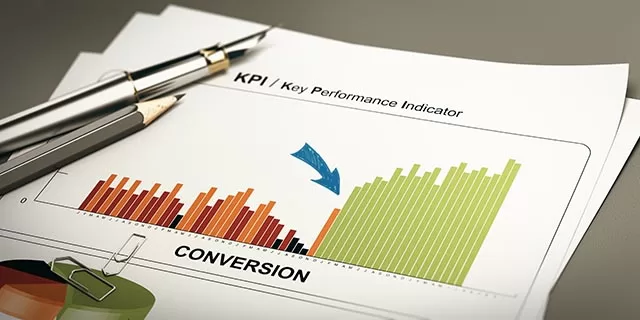
This was the image identified in the copyright enquiry.
It had not been visible during normal browsing of our website for years. We initially could not even establish where it was being used.
However, a technical investigation revealed that it remained embedded within the HTML of a legacy interactive WordPress component.
Hidden from ordinary view, but still discoverable by automated systems.
Nearly Five Years Later — Adobe Had the Proof
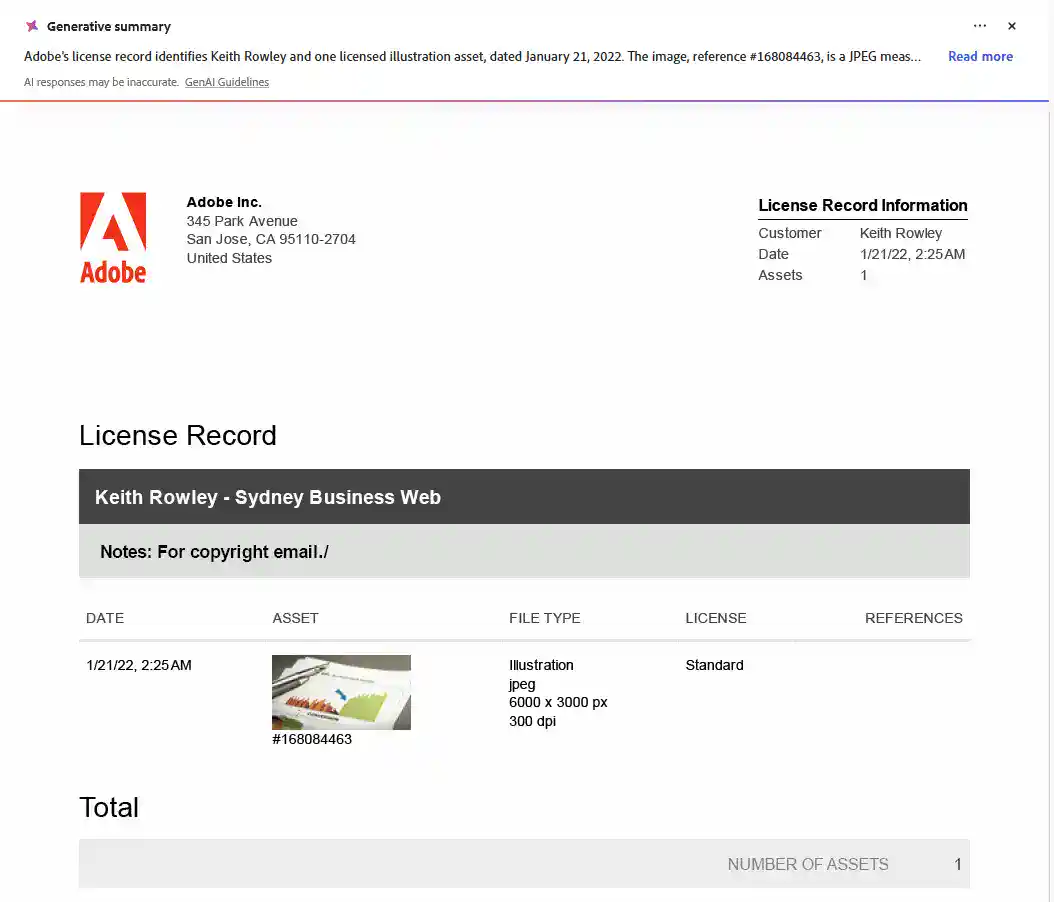
Adobe Stock retained our original licensing history and enabled us to generate a formal licence record identifying the image, customer, purchase date and licence type.
We submitted that evidence. COPYTRACK verified the licence and confirmed that the case would be closed without further action.
A Bigger Issue for Small Businesses
Copyright protection is important. As creators ourselves, we fully support the legitimate protection of intellectual property.
However, automated image discovery at scale raises an important question: what happens when the technology identifying an image does not have access to the commercial licensing records that authorise its use?
The burden of investigation falls upon the business owner, bringing uncertainty, lost working time and potentially considerable financial anxiety.
Image discovery is not proof of copyright infringement.
This article documents our investigation, examines the wider implications of automated copyright enforcement and explains how businesses can protect themselves through responsible licensing and verifiable documentary evidence.
Adobe Stock: You Are Buying More Than an Image
One of the most valuable lessons from this experience concerns the choice of commercial image supplier. When businesses purchase stock photography, they are generally thinking about the quality, suitability and cost of the image.
Far fewer consider whether they will be able to prove their entitlement to use that image five or even ten years later.
Historical Records That Remain Accessible
Sydney Business Web has acquired almost 450 assets through Adobe Stock, with our licensing history extending back to 2020.
Importantly, we can generate an individual licence document for each of these licensed assets through our Adobe account.
That represents a considerable collection of commercially usable creative assets supported by accessible documentary evidence.
The Actual Licence That Resolved Our Case
When COPYTRACK contacted us, we initially had concerns about whether the original purchase records would still be available.
PantherMedia publicly identifies COPYTRACK as its copyright enforcement partner. However, commercial images may be distributed through multiple licensing channels, and an enforcement organisation may not have access to every distributor's licensing records.
Although the precise commercial relationship between PantherMedia and Adobe Stock for this particular image has not been established, COPYTRACK accepted our Adobe Stock licence as valid.
This illustrates a fundamental limitation of image-based copyright detection: identifying the image does not necessarily identify the licensing transaction.
The image had been acquired nearly five years earlier using a single Adobe Stock plan credit.
Within minutes of accessing our Adobe Stock licensing history, we identified the original transaction and generated the formal licence record shown here.
The document establishes:
- The identity of the licensing supplier.
- The identity of the customer.
- The original purchase date and time.
- The unique Adobe Stock asset ID.
- The type of commercial licence acquired.
COPYTRACK subsequently confirmed that the licence was valid and that the case would be closed without further action.
Why Your Choice of Image Supplier Matters
There is a fundamental commercial difference between purchasing an image and purchasing an image supported by a durable, retrievable licensing record.
Without that evidence, a business may find itself spending considerable time and money defending an entirely legitimate transaction.
In our case, Adobe's historical records allowed us to demonstrate compliance without engaging a solicitor, negotiating a settlement or reconstructing years of financial records.
A commercial image licence is a business asset. The documentary evidence supporting that licence is an equally important asset.
Credit Where Credit Is Due
Adobe deserves considerable recognition for maintaining this facility. It provides genuine commercial value beyond the original purchase of a creative asset.
For businesses, website developers and marketing professionals managing hundreds or thousands of digital assets, the ability to retrieve historical licensing evidence should be an important consideration when selecting a stock image supplier.
Existing Adobe Stock customers can access their records through the Adobe Stock Licence History .
We also recommend retaining independent copies of important licence documents as part of your permanent business records.
Image Copyright Infringement Could Cost Your Business Thousands
Many business owners pay relatively little attention to the origin of images on their websites. They may have inherited content from a previous website developer, downloaded images from search engines or simply assumed that material available on the internet was free to use.
These assumptions can have serious financial consequences.
What Does Australian Copyright Law Say?
Copyright in Australia is principally governed by the Copyright Act 1968 (Cth).
Photographs, illustrations and other original artistic works generally receive copyright protection automatically. Registration is not required, and the absence of a copyright symbol or watermark does not make an image free to use.
Unless an applicable exception exists, businesses generally require permission to reproduce and communicate protected images on their websites.
The following are not, by themselves, evidence of permission:
- Finding an image through Google Images.
- Downloading an image from another website.
- Providing attribution to the photographer.
- Discovering that the image has no watermark.
- Receiving an image from a previous website developer.
- Not making any direct income from the image.
COPYTRACK Is German — Can an Australian Business Still Be Liable?
Absolutely. Australian businesses should not assume that copyright enforcement correspondence originating overseas can safely be ignored.
Australia participates in international copyright agreements, including the Berne Convention for the Protection of Literary and Artistic Works. Australian legislation and associated international protection regulations extend copyright protection to qualifying foreign works.
A photograph created overseas can therefore receive copyright protection in Australia, and its rights holder may have grounds to pursue an Australian business for unauthorised use.
However, an overseas company's reference to its domestic copyright legislation does not automatically establish that its laws or courts have jurisdiction over an Australian business. The applicable law, jurisdiction and enforcement rights depend on the circumstances.
International borders are not a reliable defence against copyright infringement.
How Much Could a Copyright Demand Cost?
Copyright enforcement businesses may seek retrospective licensing fees, compensation or a negotiated settlement. Published reports provide an indication of the sums that website operators may encounter.
| Reported demand | Approximate AUD equivalent |
|---|---|
| €300 | A$525 |
| €350 | A$613 |
| €481.50 | A$843 |
| €600 | A$1,050 |
| €1,200 | A$2,100 |
Illustrative amounts drawn from published reports and guidance concerning COPYTRACK demands. Australian dollar equivalents use an illustrative exchange rate of A$1.75 per euro, not a live currency quotation. These are reported or illustrative demand amounts, not verified settlements, statutory penalties or a fixed schedule of compensation.
Sources: ImageFence guidance on COPYTRACK demands and publicly reported customer experiences.
For a business with several unlicensed images, the financial exposure could become substantial. Professional legal advice and litigation costs could increase that exposure further.
An Actual Australian Copyright Judgment
The potential consequences are not merely theoretical.
In Tylor v Sevin [2014] FCCA 445, an American professional photographer successfully pursued an Australian travel agent for the unauthorised use of a single photograph on her business website.
Source: AIPA — Photographic Copyright Damages, legal commentary supplied by Clendons, a specialist intellectual property law firm.
The financial consequences comprised:
- US$1,850 in compensatory damages, based on the photographer's usual licensing fee.
- A$12,500 in additional damages under Section 115(4) of the Copyright Act.
- A$9,500 in legal costs.
One photograph. One website. A substantial financial consequence.
Why Were the Additional Damages So High?
The court found that neither the business owner nor her website designer had made reasonable enquiries concerning the ownership of copyright in the photograph.
The court also took into account the business owner's uncooperative conduct and her handling of attempts by the photographer's solicitors to resolve the dispute without litigation.
Deterring similar copyright infringements was another important consideration in the award of additional damages.
Two Cases — Two Very Different Outcomes
| Factor | Tylor v Sevin | Sydney Business Web |
|---|---|---|
| Copyright permission | Not obtained | Valid commercial licence |
| Licensing evidence | No valid licence established | Formal Adobe Stock record |
| Response to correspondence | Uncooperative | Prompt investigation and response |
| Outcome | Copyright infringement judgment | Licence verified; case resolved |
| Financial consequence | A$22,000 plus US$1,850 | A$0 |
These cases differ fundamentally in their licensing circumstances, but together they illustrate the importance of responsible image acquisition, documentary evidence and responding appropriately to copyright correspondence.
The judgment should not be interpreted as a standard penalty for every instance of unauthorised image use. The damages and costs reflected the particular circumstances of the case.
Sources: Queensland Government Crown Law; Simpsons Solicitors; AIPA — Photographic Copyright Damages.
What If You Did Not Know the Image Was Copyrighted?
Section 115 of the Australian Copyright Act provides for remedies including injunctions, damages or an account of profits. Additional damages may also be awarded in appropriate circumstances.
Section 115(3) provides limited protection against damages where a defendant establishes that they were unaware of the infringement and had no reasonable grounds to suspect it. An account of profits may nevertheless remain available.
Simply claiming ignorance of copyright law is not sufficient to establish this protection.
The Age of Automated Image Discovery
Historically, discovering unauthorised use of a photograph might have depended on its creator, a customer or another individual recognising the image on a website.
That is no longer the case.
Automated web crawlers, reverse image search, perceptual image matching and increasingly sophisticated AI-assisted computer vision systems enable organisations to search for matching images across enormous numbers of websites.
Depending on the technology employed, changing an image's filename, resizing it, compressing it or converting it to another format may do little to prevent identification.
Illustrative copyright monitoring workflow. The precise detection technology and degree of human involvement in our COPYTRACK case have not been independently established.
Hidden Does Not Mean Undetectable
Our own experience demonstrates a particularly important aspect of modern website technology.
The image identified by COPYTRACK had not been visible during our normal browsing of the website for years. Nevertheless, references to it remained in the underlying HTML of a legacy interactive component.
From a machine perspective, the resource was still discoverable.
This distinction extends well beyond interactive hotspots. Website images can remain accessible through:
- Legacy pages and forgotten landing pages.
- Hidden tabs, popups and interactive components.
- CSS background image references.
- Mobile-only or desktop-only content.
- Publicly accessible WordPress media files.
- Automatically generated thumbnails and resized variants.
- Old website installations and publicly accessible staging sites.
The fact that an image is no longer prominent, or that you have forgotten it exists, does not necessarily mean that it is inaccessible or that its use is legally irrelevant.
In an age of automated image recognition, obscurity is no substitute for copyright compliance.
Take Responsibility for Your Website Content
Business owners should periodically audit the images and other commercial creative assets associated with their websites, including legacy content that may no longer be visible during normal browsing.
Do not assume that everything inherited from a previous website developer was correctly licensed. Establish the origin of your assets and ensure that the relevant licences cover their current use.
Where licensing cannot be established, investigate the circumstances and consider replacing the material with properly licensed alternatives.
The cost of a legitimate stock image is generally modest. The cost of defending unauthorised use can be anything but.
Is That Copyright Infringement Email Genuine or a Scam?
Unexpected copyright correspondence presents businesses with an immediate security problem. Before investigating the alleged infringement, they must establish whether the sender is genuine.
Copyright enforcement provides a particularly convincing opportunity for scammers. The threat of legal action, financial compensation and a response deadline can create exactly the conditions under which people make hurried and expensive mistakes.
The Correspondence We Received
According to the information provided to us, you may be using one or more images...
The email identified our business, website, a specific page, an image and an individual case reference. It also provided a deadline for submitting evidence of licensing.
These details made the correspondence credible, but they were not sufficient to establish authenticity. Much of this information could also be collected from publicly accessible website resources.
Examining the Actual Email Headers
Rather than relying on the sender's displayed name, we examined the underlying email headers and the authentication results recorded by our receiving mail server.
| Authentication check | Observed result |
|---|---|
| SPF authentication | PASS |
| DKIM — copytrack.com | Valid signature |
| DKIM — amazonses.com | Valid signature |
| Sending infrastructure | Amazon Simple Email Service |
| Transport encryption | TLS 1.3 |
| SpamAssassin score | 1.0 — below threshold of 5.0 |
Actual authentication results recorded in the email received by Sydney Business Web on 28 November 2026. A low spam score or encrypted connection alone does not establish sender legitimacy.
The authentication results supported the conclusion that the correspondence originated from infrastructure authorised to send email on behalf of COPYTRACK.
We also independently investigated the organisation and its copyright enforcement activities.
What Email Authentication Can — and Cannot — Prove
What We Established
- The sending domain was authenticated.
- The email carried valid digital signatures.
- The sending infrastructure was consistent with legitimate commercial email delivery.
- COPYTRACK was a genuine copyright enforcement organisation.
What We Had Not Established
- Whether the identified image was actually present on our website.
- Whether the image was used without permission.
- Whether a valid commercial licence existed.
- Whether any financial liability existed.
This distinction is critical. Email authentication helps establish the origin of a communication. It does not establish the legal validity of its contents.
Recognising Potential Copyright Scams
Business owners receiving copyright correspondence should exercise particular caution where the sender:
- Demands immediate payment under threat of legal action.
- Provides no identifiable image, website location or supporting evidence.
- Uses a domain that imitates a recognised copyright enforcement organisation.
- Requests payment through cryptocurrency, gift cards or unusual payment arrangements.
- Requires recipients to download unfamiliar software or executable attachments.
- Requests website administration credentials or unrelated personal information.
Where possible, verify the organisation independently rather than relying exclusively on links contained in the original email.
Our Conclusion: Genuine Enquiry, No Infringement
In our case, the correspondence from COPYTRACK was genuine. The organisation subsequently reviewed our documentary evidence, confirmed the validity of our Adobe Stock licence and advised that no further action was required.
We therefore had a legitimate copyright enquiry concerning a legitimately licensed image.
Had we dismissed the original email as a scam and ignored it, the consequences could have been considerably more serious.
A preliminary request for licensing evidence could have escalated into a formal demand for compensation, followed by legal correspondence and potentially additional costs.
Ironically, this could have happened despite our holding a perfectly valid commercial licence for the image concerned.
Ignoring genuine copyright correspondence is not a risk management strategy. Equally, assuming that genuine correspondence automatically establishes financial liability is a potentially expensive mistake.
Authenticate the sender. Investigate the evidence. Establish the licensing position. Never confuse the authenticity of a communication with the validity of a claim.
Finding an Image That Had Been Hidden for Years
Perhaps the most technically interesting aspect of this copyright enquiry was that we could not initially locate the image anywhere in the visible content of the referenced page.
We knew our website intimately. Nevertheless, the image had effectively disappeared from our awareness through successive years of website development and content changes.
So how had a copyright enforcement organisation discovered it?
Looking Beyond the Browser
Human Perspective
A visitor sees the rendered website: its text, graphics, navigation and immediately visible interactive elements.
The image in question was not visible during ordinary browsing. It had not been part of our normal visual experience of the website for years.
Machine Perspective
An automated crawler can examine the underlying HTML and extract references to images regardless of their initial visual presentation.
Where those resources remain accessible, image recognition systems can potentially retrieve and identify them.
The Evidence in Our HTML Source Code
We retrieved the complete HTML source of the referenced page and examined its image references.
Buried within the source was an interactive image hotspot created using the Draw Attention WordPress plugin. The hotspot was entitled High Conversion and contained the image identified by COPYTRACK.
Extract from the actual page source<div class="hotspot-info "
id="hotspot-hotspot-8462-3">
<h2 class="hotspot-title">High Conversion</h2>
<div class="hotspot-thumb">
<img loading="lazy"
decoding="async"
width="640"
height="320"
src="https://sydneybusinessweb.com.au/wp-content/uploads/2022/01/conversion-jpg.webp"Actual HTML attributes extracted from the Sydney Business Web About page on 28 November 2026. Formatting adjusted and remaining attributes omitted for readability.
The source code established the location of the image, its associated interactive component and its original upload directory.
We subsequently used the browser's developer tools to inspect the Document Object Model (DOM), confirming that the interactive content was initially hidden.
One Image — Seven Different File Variants
WordPress had also generated several resized versions of the original image. These were referenced through the responsive image attributes within the HTML.
| Referenced filename | Dimensions |
|---|---|
| conversion-jpg.webp | 640 × 320 |
| conversion-600x300.jpg | 600 × 300 |
| conversion-300x150.jpg | 300 × 150 |
| conversion-250x125.jpg | 250 × 125 |
| conversion-200x100.jpg | 200 × 100 |
| conversion-150x75.jpg | 150 × 75 |
| conversion-38x19.jpg | 38 × 19 |
Image variants identified in the original page source. These are different representations of the same licensed creative asset, not seven separate stock image purchases.
This is an important consideration for website owners. Modern content management systems routinely generate multiple versions of uploaded images, providing additional opportunities for automated discovery.
Why Image Optimisation Does Not Prevent Recognition
Modern image matching technology is not necessarily dependent upon filenames, file extensions or exact binary file contents.
Perceptual image matching and computer vision can identify visually similar images even after resizing, compression or conversion between image formats.
Our image had been converted to WebP, with additional JPEG variants remaining referenced in the source code. Neither its age, its optimised format nor its initial visual concealment prevented discovery.
Visual invisibility does not equate to machine invisibility.
The Persistence of Legacy Website Content
Perhaps the most remarkable aspect of this investigation was the persistence of an image acquired nearly five years earlier, through successive website updates, design changes and content revisions.
Although the image was no longer apparent during normal browsing, its references remained embedded within the underlying page architecture.
This illustrates why a comprehensive website copyright audit must extend beyond a visual review of current pages. Legacy components, historical content and associated media resources can remain machine-discoverable for years.
In our case, the original commercial licence remained valid, and Adobe's historical records enabled us to demonstrate that entitlement.
What This Means for Your Business
Website owners who believe that an old, forgotten or hidden image is unlikely to attract attention should reconsider that assumption.
Automated copyright discovery systems can potentially examine website resources at a scale far beyond conventional human inspection.
Although we cannot establish the precise detection technology employed in our particular case, the discovery of this legacy image illustrates why copyright compliance must extend beyond the content that business owners can immediately see.
Audit what your website contains, not merely what your website displays.
Protecting Your Business Against Image Copyright Infringement Claims
Copyright compliance should form part of routine business website management, alongside security, backups, software maintenance and data protection.
The following measures can substantially reduce both the risk of infringement and the cost of responding to an unexpected copyright enquiry.
Use Reputable Image Suppliers
Acquire images through established commercial licensing platforms, directly from their creators or from sources with clearly documented permissions. Consider the supplier's ability to provide historical licensing evidence.
Understand Your Licence
Check that the licence covers your intended commercial use. Website publication, advertising, merchandise, redistribution and client projects may be subject to different licensing conditions.
Retain Documentary Evidence
Download licence certificates, purchase confirmations and relevant licensing terms. Do not rely exclusively on a supplier maintaining your account records indefinitely.
Audit Existing Website Content
Review current pages, historical content, media libraries, interactive components and publicly accessible legacy resources. Investigate images whose origins cannot be established.
Check Third-Party Content
Establish the licensing status of images supplied by website developers, marketing agencies, employees and contractors. Do not assume that payment for website development automatically includes every necessary image licence.
Preserve Asset Identification
Maintain a connection between the original stock image identification number and the filename used on your website, particularly when images are renamed, resized or converted to WebP.
Review Your Business Insurance
Check whether your professional indemnity or other business insurance provides relevant intellectual property protection. Understand any exclusions, excesses and notification requirements before a dispute arises.
Respond Promptly to Enquiries
Authenticate the correspondence, preserve the evidence, investigate the circumstances and establish your licensing position. Seek professional legal advice where necessary rather than ignoring genuine correspondence or making premature payments.
Maintain a Digital Asset Licence Register
A simple spreadsheet or database can provide an effective record of your business's commercially licensed creative assets.
Using the image involved in our own copyright enquiry, a typical register entry might contain the following information.
| Record field | Example — Sydney Business Web |
|---|---|
| Licensing supplier | Adobe Stock |
| Original asset ID | 168084463 |
| Creator | Olivier Le Moal |
| Licence acquisition date | 21 January 2022 |
| Licence type | Standard |
| Acquisition cost | One Adobe Stock plan credit |
| Website filename | conversion-jpg.webp |
| Associated website | sydneybusinessweb.com.au |
| Documentary evidence | Adobe Stock PDF licence record |
| Licence verification | Accepted by COPYTRACK, 28 November 2026 |
Example based on an actual commercially licensed image and its documented licensing history.
Do You Actually Know What Is on Your Website?
Many business owners commission a website, approve its appearance and subsequently pay very little attention to the origins of its creative content.
Years later, the original developer may be unavailable, the business relationship may have ended and the original licensing records may be difficult to recover.
Unfortunately, none of these circumstances necessarily removes the business's potential exposure to copyright claims.
If you are acquiring a business, commissioning a new website or transferring an existing website to another developer, make digital asset licensing part of the handover process.
Website Backups Are Not Licence Backups
A conventional website backup preserves your files, images, databases and website configuration. It does not necessarily preserve evidence of your entitlement to use commercially licensed content.
Licensing documentation should therefore be retained separately, backed up securely and transferred appropriately when responsibility for website management changes.
Owning a copy of an image and holding a demonstrable legal right to use it are two entirely different things.
Copyright Compliance in an Age of Automated Discovery
Our experience began with an unexpected and distinctly unwelcome email. It ended with documentary confirmation that our original commercial image licence was valid and that no further action was required.
The Complete Case Timeline
Image legitimately licensed through Adobe Stock using one subscription plan credit.
COPYTRACK's reported discovery date for the image embedded within our website's legacy interactive content, as stated in its subsequent copyright enquiry.
Copyright enquiry received. Email authentication and technical investigation establish the authenticity of the correspondence and the location of the image.
Adobe Stock historical licensing records retrieved and a formal licence document generated and submitted.
COPYTRACK confirms that the licence is valid and advises that the case will be closed without further action.
Upon verification, we have confirmed that the license is valid. Accordingly, we will proceed with closing case ID 55BF48.
No further action is required from your side.
Copyright Protection Is Necessary
We support the legitimate protection of intellectual property. Creative professionals invest considerable time, skill and resources in producing work from which they deserve to earn an income.
Businesses that knowingly use copyrighted material without permission should not expect to remain undetected simply because their website is small or their content is obscure.
But Detection Is Only Half the Equation
The increasing sophistication of automated image recognition creates a significant imbalance when image discovery is not accompanied by access to comprehensive licensing information.
Technology can identify a potentially copyrighted asset within seconds, while the business receiving the subsequent enquiry may have to reconstruct years of purchasing history to establish its legitimate entitlement.
Even where a business has complied fully with its copyright obligations, the resulting disruption, anxiety and administrative burden can be considerable.
The Real Value of Responsible Purchasing
Our decision to purchase commercially licensed creative assets through Adobe Stock proved its value nearly five years after the original transaction.
It was not simply the quality of the image that mattered. It was Adobe's ability to provide verifiable historical evidence of the rights we had acquired.
That is a compelling example of the long-term commercial value of dealing with a reputable licensing supplier.
A Final Warning to Business Owners
If you have never investigated the licensing status of the images on your website, now would be an excellent time to do so.
Do not wait for an international copyright enforcement company to discover a problem that you could have identified and resolved yourself.
In an increasingly automated online environment, assuming that unauthorised content will remain unnoticed is a potentially expensive business strategy.
Respect copyright. Know what your website contains. Purchase legitimate licences. Preserve the evidence.
Image Copyright Infringement — Frequently Asked Questions
Is COPYTRACK a legitimate company or a scam?
COPYTRACK is a legitimate German copyright enforcement organisation. However, scammers can impersonate legitimate companies. Always verify the sender independently before responding, supplying documents or making payments. In our documented case, COPYTRACK's correspondence was genuine and the matter was resolved after we supplied evidence of a valid licence.
What should I do if I receive an image copyright infringement email?
Authenticate the sender, preserve the correspondence, identify the image concerned and investigate its licensing history. Respond within the specified timeframe through a verified communication channel. Do not ignore genuine correspondence, admit liability prematurely or agree to payment before establishing the facts. Obtain legal advice where necessary.
Can I receive a copyright infringement notice for an image I purchased legally?
Yes. Automated image discovery systems may identify copyrighted material without having access to the licensing records of third-party distributors. Sydney Business Web received such an enquiry for an image legitimately licensed through Adobe Stock in January 2022. COPYTRACK subsequently verified the licence and confirmed that no further action was required.
How much can image copyright infringement cost an Australian business?
There is no fixed amount. Compensation demands may range from hundreds to thousands of dollars, depending on the image, its use and the circumstances. Australian courts may award damages, additional damages and costs where appropriate. A single unauthorised photograph can therefore result in substantial financial exposure.
Can a German copyright enforcement company pursue an Australian business?
Potentially, yes. Australia's participation in international copyright agreements provides protection for qualifying overseas creative works. However, the applicable law, jurisdiction and authority to enforce a particular claim depend on the circumstances. An overseas demand is not automatically enforceable merely because it has been issued.
Can AI find copyrighted images hidden on a website?
Automated web crawlers, perceptual image matching and AI-assisted computer vision can potentially discover and identify images referenced in accessible website resources, even where they are not immediately visible to visitors. Our case involved an image embedded within a legacy WordPress interactive hotspot. The precise detection technology used in our case has not been established.
Does resizing an image or converting it to WebP prevent copyright detection?
No. Modern image recognition techniques can potentially identify visually matching images despite changes to filenames, dimensions, compression and file formats. Image optimisation does not remove copyright protection or provide permission to use an image.
Does deleting an image remove liability for copyright infringement?
Not necessarily. Removing an image from public use may prevent further unauthorised publication, but it does not automatically resolve potential liability for previous use. Preserve relevant evidence and investigate the licensing position before agreeing to any settlement.
Is there a time limit for pursuing copyright infringement in Australia?
Under Section 134 of the Copyright Act 1968, an action for copyright infringement generally must be brought within six years of the infringing act. However, this does not mean that an image uploaded more than six years ago is automatically immune from a copyright claim. Subsequent unauthorised use may constitute a separate infringement. Businesses should retain licensing evidence for as long as they continue to use the relevant creative assets.
Am I responsible for images uploaded by my website developer?
A business may still face copyright claims concerning material supplied or uploaded by a website developer, employee or marketing agency. Responsibility depends on the circumstances, contractual arrangements and applicable law. Businesses should establish that appropriate licensing permissions exist for third-party content used on their websites.
Can I legally use images found through Google Images?
Finding an image through Google Images does not grant permission to use it. Businesses must establish the applicable copyright status, licensing conditions and permitted uses before publishing an image. Providing attribution alone does not necessarily satisfy copyright requirements.
Can Adobe Stock provide proof of an old image licence?
Yes. Adobe Stock provides a licence history facility. In our experience, we could generate a formal licence document for an image purchased nearly five years earlier. Sydney Business Web has almost 450 licensed Adobe Stock assets dating back to 2020, with individual licensing documentation available through our account.
Does cancelling an Adobe Stock subscription invalidate previously licensed images?
Adobe Stock licences are generally perpetual for uses permitted under the applicable licence terms. Cancelling a subscription does not ordinarily invalidate licences already acquired. However, businesses should retain their licensing documentation and check the specific terms applicable to their assets.
How can I protect my business against future image copyright claims?
Purchase images from reputable licensing suppliers, retain documentary evidence, maintain a digital asset licence register and periodically audit current and legacy website content. Ensure that your licences cover the intended commercial use and respond promptly to any genuine copyright enquiries.
Copyright Law, Image Licensing and Business Protection Resources
The following resources support the legal, technical and commercial considerations discussed in this article. They are provided to assist business owners, website developers and digital marketing professionals in understanding their copyright responsibilities.
Australian Copyright Legislation and Government Guidance
The principal Australian copyright legislation, including Section 115 concerning civil remedies, damages, additional damages and innocent infringement.
Official guidance on Australian copyright protection, ownership, exceptions and international copyright agreements.
Guidance on obtaining permission, understanding licensing arrangements and using copyright-protected material.
Explains international copyright protection and Australia's participation in the Berne Convention.
Australian Legal Cases and Responding to Copyright Demands
Published judgment concerning unauthorised use of a photograph on a website, including compensatory damages, additional damages and legal costs.
Government legal commentary examining the financial consequences of unauthorised stock photography use.
Legal commentary on Tylor v Sevin, examining additional damages, legal costs and the consequences of failing to respond appropriately to copyright infringement proceedings.
Guidance on copyright ownership, website image licensing and the importance of establishing permission before publishing third-party images.
Practical guidance for businesses receiving correspondence alleging intellectual property infringement.
Independent legal information on investigating copyright demands, establishing permissions and responding appropriately.
Email Authentication and Copyright Scams
Technical guidance on email authentication and protection against fraudulent email communications.
Specific guidance on fraudulent copyright correspondence and the importance of independently verifying purported infringement notices.
Adobe Stock — Commercial Image Licensing
Commercial licensing conditions, permitted uses and distinctions between available licence types.
Account-based access to historical asset licensing records. This is the facility Sydney Business Web used to generate the documentary evidence that resolved our copyright enquiry.
Information concerning licensed assets, customer accounts, historical purchases and procedures for reporting third-party copyright claims involving Adobe Stock content.
Copyright Enforcement and Reported Financial Demands
The company's own explanations of its copyright enforcement services, licensing enquiries and resolution procedures.
Published guidance discussing reported copyright demand amounts and practical response options. This is a commercial information source, not an authoritative statement of Australian law.
Public accounts of experiences with copyright enforcement correspondence, including reported financial demands. Individual accounts are anecdotal and have not been independently verified by Sydney Business Web.
Primary Evidence — Sydney Business Web Case Study
This article is based on an actual copyright enquiry received and resolved by Sydney Business Web on 28 November 2026.
Our supporting records include:
- Original COPYTRACK copyright enquiry and email authentication headers.
- Original website HTML source and associated image references.
- Browser developer tools inspection of the interactive hotspot.
- WordPress media library records dating to 21 January 2022.
- Adobe Stock historical licensing records.
- Formal Adobe Stock licence document for asset 168084463.
- COPYTRACK's written confirmation that the licence was valid and no further action was required.
Editorial and legal disclaimer: This article documents the first-hand experience of Sydney Business Web and provides general technical, commercial and copyright information. It does not constitute legal advice. Copyright liability, available remedies and international jurisdiction depend on the circumstances of each individual matter.
Reported financial demands are illustrative and do not represent a fixed compensation schedule or independently verified settlement amounts. The precise automated detection technology employed in our case has not been independently established.
References reviewed on 28 November 2026. This article is independently authored and is not sponsored by Adobe, COPYTRACK or any other organisation referenced.