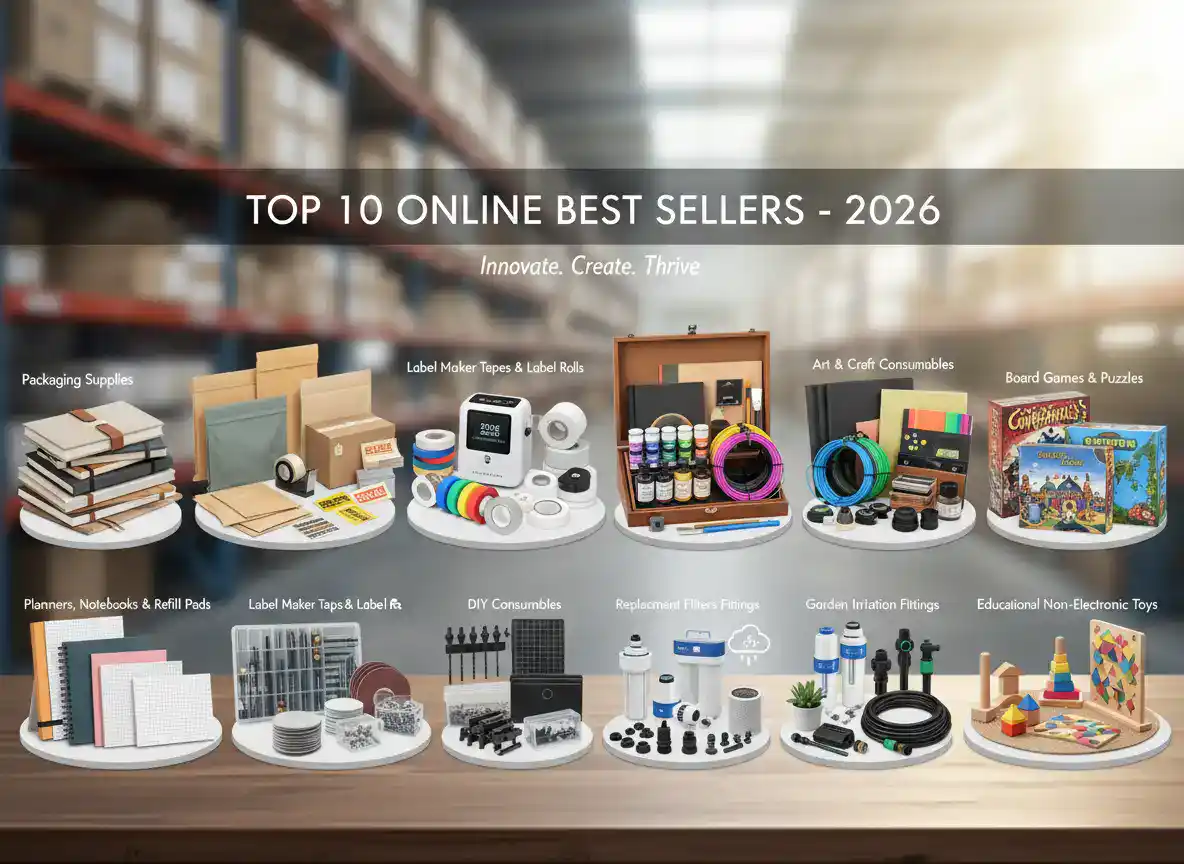
Best products to sell online in 2026
If you’re searching for the best products to sell online in Australia in 2026, you’ve probably already seen the usual lists — trending gadgets, viral TikTok items, and “guaranteed winners”.
Most of those don’t survive contact with reality. Shipping costs blow out, margins collapse, returns pile up, and suddenly that “winning product” is quietly draining your bank account.
This post is a complement to our successful 'Ten Worst Products to Sell Online' — and it takes the opposite angle: what actually works, consistently, in the real world.
We’re not chasing hype here. We’re looking at products that hold up under Australian conditions — shipping distances, customer expectations, supplier reliability, and the simple question: can you sell this more than once without headaches?
Below are product categories that tend to stay profitable in 2026 — along with the thinking behind them, so you’re not just copying a list… you’re making better decisions.
If it’s “trending”, it’s probably crowded. If it’s reliable, repeatable, and survives delivery… that’s where the money is.
Trending vs Profitable: They’re Not the Same Thing
One of the biggest mistakes people make when choosing products to sell online in Australia is confusing trending with profitable.
A product can be everywhere — TikTok, YouTube, Facebook ads — and still be a terrible business decision. In fact, the more visible it is, the more likely you are to face heavy competition, rising ad costs, and shrinking margins. If you want real-world examples, see our breakdown of the worst products to sell online.
On the other hand, many of the best products to sell online in 2026 won’t look exciting at all. They’re steady, repeatable, and solve simple problems without drama.
- Trending products: High visibility, fast spikes in demand, usually crowded and price-sensitive
- Profitable products: Consistent demand, manageable logistics, repeat purchases, and healthier margins
In Australia especially, factors like shipping distance, fragility, and return handling matter far more than most “top 10” lists admit. A product that works in the US can fall apart quickly here.
The goal isn’t to chase what’s hot — it’s to identify what keeps working once the hype fades.
Trends bring traffic. Reliable products build businesses.
Who this post is written for
If you’re tired of the daily grind and you want to build a realistic online income stream in Australia — without the usual pain of high returns, slow shipping, or saturated junk niches — this list is written for you as part of our professional ecommerce website development service.
It’s built for action-takers: practical people who don’t want hype, and who want products that work with Australian realities (shipping costs, delivery times, returns, and GST).
This isn’t a “hot products” list — it’s a “low drama, repeatable profit” list for Australia.

1) Appointment books & job planners for service businesses
Best products to sell online in 2026 aren’t always sexy. Sometimes they’re just useful — like a tough appointment book that lives in a ute, a salon, or a clinic reception without falling apart. (Unlike certain crew members I’ve met at sea.)
Who buys this (and why they buy it online)
- Tradies & mobile service businesses (plumbers, sparkies, landscapers): want job logs, quote pads, day-planners that survive real life.
- Salons, barbers, beauty rooms: want weekly appointment layout + staff columns + “no-show” notes, often with their branding.
- Allied health & clinics: want reception-friendly layouts, privacy notes, predictable formatting.
- Coaches & consultants: want structured weekly planners and client trackers.
Why online? Because Officeworks/Kmart diaries are built for “everyone”, which means they’re perfect for nobody. Online buyers want a specific layout, specific size, and often branding — and they’ll happily order it shipped because it’s small, light, and reliable.
Demand check (quick, common-sense proof)
- Amazon AU maintains a dedicated “Appointment Books & Planners” best-sellers category — that’s ongoing demand, not a one-week fad: Amazon AU: Appointment Books & Planners
- Etsy AU shows huge planner demand on the digital side (a signal that people actively shop for planners, layouts, systems): Etsy AU: Best selling printable planners
Why this works (especially in Australia)
- Low shipping drama: compact, light, and not fragile.
- Low “fit” problems: no sizing issues. Nobody returns a job book because it’s “too medium”.
- Easy to differentiate: layout + durability + niche (tradies/salons/clinics) beats generic diaries.
- Repeat/refresh cycle: yearly diaries, quarterly job books, refills, replacement pads.
Returns reality check (benchmarks)
| Benchmark category | What it typically looks like |
|---|---|
| Stationery & hobby supplies (broad benchmark) | Often among the lowest-return segments (around ~8% in one major benchmark). We keep it low by showing dimensions, page count, paper type, binding, and inside-page photos. |
Note: This is a broad benchmark (not Australia-only) — useful for “is this category generally high-return?” comparisons, not a promise written in blood. (Benchmark source (PDF))
Margin reality check (gross vs net, including postage)
This is where many “best products to sell online” lists quietly shuffle off the deck and pretend shipping doesn’t exist. In Australia, postage is real money, so here’s a simple way to think about it.
- Gross margin = product profit before shipping and fees.
- Net contribution = what’s left after shipping label + payment fees (still before your overheads like ads/time).
Formulas (ex GST):
Gross margin % = (SellPrice_exGST − COGS) / SellPrice_exGST
Net contribution = Revenue − COGS − ShippingLabel − PaymentFees − ReturnsAllowance
| Example (typical small parcel order) | Amount |
|---|---|
| Sell price (inc GST) | $34.95 |
| Sell price (ex GST) | $31.77 |
| COGS: book cost + packaging + inbound freight (ex GST) | $9.20 (e.g., $7.50 + $1.10 + $0.60) |
| Shipping label you pay (typical metro small parcel, ex GST) | $9.50 (varies by weight, zone, carrier, and account rates) |
| Payment fee (example) | $0.86 |
| Returns allowance (low-return category, example ~1% of revenue) | $0.32 |
| Gross margin (product-only, ex GST) | $22.57 (~71%) |
| Net contribution (after label + fees, ex GST) | $11.89 (~37%) |
What this means in plain English: you can have a gorgeous-looking gross margin, then watch postage eat half your lunch. The fix is simple: bundles (same label cost, higher basket), shipping charged (even partial), and tight product pages (fewer refunds).
How to sell it (without creating returns you could see from space)
- Pick ONE niche first: “Tradie job planner” or “Salon appointment book” beats “Planner for humans”.
- Show inside pages: layout photos reduce “not what I expected” refunds.
- Be painfully clear on size: A4/A5 + thickness + “fits glovebox / fits counter” type notes.
- Bundle smartly: book + refill pad + pen loop + invoice/quote pads (higher order value, same shipping).
- Make the product page do the explaining: less support, fewer misunderstandings, fewer returns.
How to source this product in Australia
Start with local short-run print or Australian stationery wholesalers so you can validate demand without buying a container load. If you want a branded version, use a local printer for small batches first (prove the niche), then scale. POD can work for early testing, but for business customers the difference-maker is usually durability (binding, covers, paper) — the thing has to survive the real world, not just look pretty on Instagram.
If your product page answers the obvious questions up front, your returns rate usually drops — almost like magic. Boring, profitable magic.
Marketplace fees reality check (Amazon/eBay)
The margin example above assumes you sell on your own site. If you sell via a marketplace (especially Amazon), you must subtract marketplace fees on top of shipping/fulfilment and payment costs.
- Amazon referral fee: varies by category and (in many categories) sits roughly in the 6%–15% range. Always check the current fee table before you commit to a product: Amazon AU seller fees & pricing
- Fulfilment costs: if you use FBA, you may replace your “shipping label” line item with Amazon fulfilment + storage-type fees.
- Ads often become non-optional: for competitive categories, paid visibility can become a real “tax” on profit.
Extra formulas (ex GST):
MarketplaceFee = SellPrice_exGST × ReferralFeeRate
Net contribution (marketplace) = Revenue − COGS − Shipping/fulfilment − PaymentFees − MarketplaceFee − ReturnsAllowance
| Sensitivity example (using your numbers) | Amount |
|---|---|
| Existing net contribution (own site, ex GST) | $11.89 |
| Referral fee example @ 10% of $31.77 (ex GST) | $3.18 |
| Net contribution after 10% referral fee | $8.71 |
| Referral fee example @ 15% of $31.77 (ex GST) | $4.77 |
| Net contribution after 15% referral fee | $7.12 |
Note: Referral fees and other charges change by category/program. Use the Amazon AU pricing page above as the source of truth.
If you sell this on Amazon: reduce “copy risk” and protect your margin
Amazon is brilliant at one thing: turning a good idea into a commodity. If you list a plain, generic appointment book and it starts moving volume, you’re inviting a race to the bottom — and you may find yourself competing against bigger sellers (or private-label lookalikes) on price alone.
- Don’t sell a “plain diary”. Sell a system: a tradie job workflow, a salon no-show workflow, a clinic intake workflow — with layouts that actually match that job.
- Make it hard to clone: custom inside pages, niche terminology, unique page sequencing, and a recognisable “house style”.
- Bundle to defend margin: book + refills + pen loop + quote/invoice pads. Same shipping/fulfilment touch, higher basket, less direct comparability.
- Create repeat purchases off-Amazon: include a QR code to free templates or refill reminders on your own site (keep it helpful, not spammy).
- Own the brand signals: packaging, inserts, and consistent branding so customers remember you, not just “that planner I got on Amazon”.
Bottom line: use Amazon for reach, but don’t build your whole business on a product that can be copied in an afternoon. Build defensibility into the layout, the bundle, and the repeat purchase path.
2) Packaging supplies that small online sellers reorder (mailer bags, cartons, bubble wrap, tape)
If “packaging supplies” sounds like something only a giant manufacturer can do — fair. But that’s the wrong mental model. Joe Average isn’t competing with factories. He’s selling small-batch, ready-to-ship, “fits my products” packaging kits to other small businesses who reorder every month.
Who buys this (and why they buy it online)
- Marketplace sellers (eBay/Amazon/FB): need replenishment fast, in small quantities, without minimum orders.
- Etsy / handmade brands: want presentable packaging (tissue, stickers, compostable mailers) without buying a pallet.
- Micro retail & clothing sellers: want consistent mailer sizes + “returns” bags + tape + labels.
- Fragile product sellers (candles, glass, cosmetics): want “fits X jar size” cartons + inserts + bubble/void fill.
Why online? Because local options are either limited, inconsistent, or sold in awkward quantities. Online buyers want the right size, the right pack count (25/50/100), and delivery when they run low.
What you actually sell (so you don’t become a commodity)
- Curated “starter packs”: everything a new seller needs for their first 50–100 orders.
- Niche kits: “Candle shipping kit (for 200–300g jars)”, “Clothing mailer kit”, “Cosmetics shipping kit”.
- Reorder bundles: mailers + tape + labels + fragile stickers (one click, monthly repeat).
- Eco variants: compostable mailers / paper tape / recycled cartons (clear positioning, higher willingness to pay).
Demand check (quick, common-sense proof)
- Every online seller ships. That’s built-in demand, not trend demand.
- Search behaviour is predictable: people don’t browse for “packaging”; they search for exact sizes, pack counts, and use-cases (“500 satchels”, “A4 mailers”, “candle boxes”).
Why this works (especially in Australia)
- Repeat purchases: consumables get reordered (great for SEO + email reminders).
- Low returns: if you show sizing clearly, returns are minimal.
- Easy to add value: “fits X product size” guidance beats the cheapest generic listing.
- Works for a small operator: you can start with 8–15 SKUs and build from there.
Returns reality check (what can go wrong)
- Main risk is “wrong size”: not faults. Fix it with clear dimensions + “fits these examples”.
- Damage risk is low: cartons and mailers aren’t fragile; they ship well.
Margin reality check (gross vs net, including postage)
Packaging is a “small ticket” product, so shipping and pick/pack effort can be the whole game. The trick is: bundles, cart value targets, and charging shipping (even partially).
- Gross margin = product profit before shipping and fees.
- Net contribution = what’s left after shipping label + payment fees (still before overheads like ads/time).
Formulas (ex GST):
Gross margin % = (SellPrice_exGST − COGS) / SellPrice_exGST
Net contribution = Revenue − COGS − ShippingLabel − PaymentFees − ReturnsAllowance
| Example (typical “starter pack” order) | Amount |
|---|---|
| Sell price (inc GST) | $79.95 |
| Sell price (ex GST) | $72.68 |
| COGS: kit contents + packaging + inbound freight (ex GST) | $38.40 (e.g., satchels + tape + labels + void fill + inbound) |
| Shipping label you pay (satchel/parcel, ex GST) | $10.50 (varies by weight, zone, carrier, rates) |
| Payment fee (example) | $1.60 |
| Returns allowance (low-return category, example ~0.5% of revenue) | $0.36 |
| Gross margin (product-only, ex GST) | $34.28 (~47%) |
| Net contribution (after label + fees, ex GST) | $21.82 (~30%) |
What this means in plain English: packaging can be very profitable if you keep the order size sensible. If you try to sell a single roll of tape with “free shipping”, postage will eat you alive.
How to sell it (so Joe Average can actually win)
- Lead with kits, not components: customers want “solve my shipping”, not “here’s tape”.
- Set a minimum order target: build bundles so most orders land above a profitable threshold.
- Make sizing idiot-proof: dimensions + “fits these examples” + a simple size guide image.
- Offer 2–3 pack counts: 25 / 50 / 100 beats one awkward quantity.
- Sell the reorder: “Monthly top-up pack” is where the stable profit sits.
How to source this product in Australia
You don’t start by manufacturing cartons. You start by buying wholesale packaging locally, then packaging it into seller-friendly kits. Keep the SKU count small. Prove demand. Then expand into more sizes and niche kits once you know what actually moves.
Don’t sell “bubble wrap”. Sell “shipping made easy” for a specific type of seller — and the repeat orders take care of the rest.
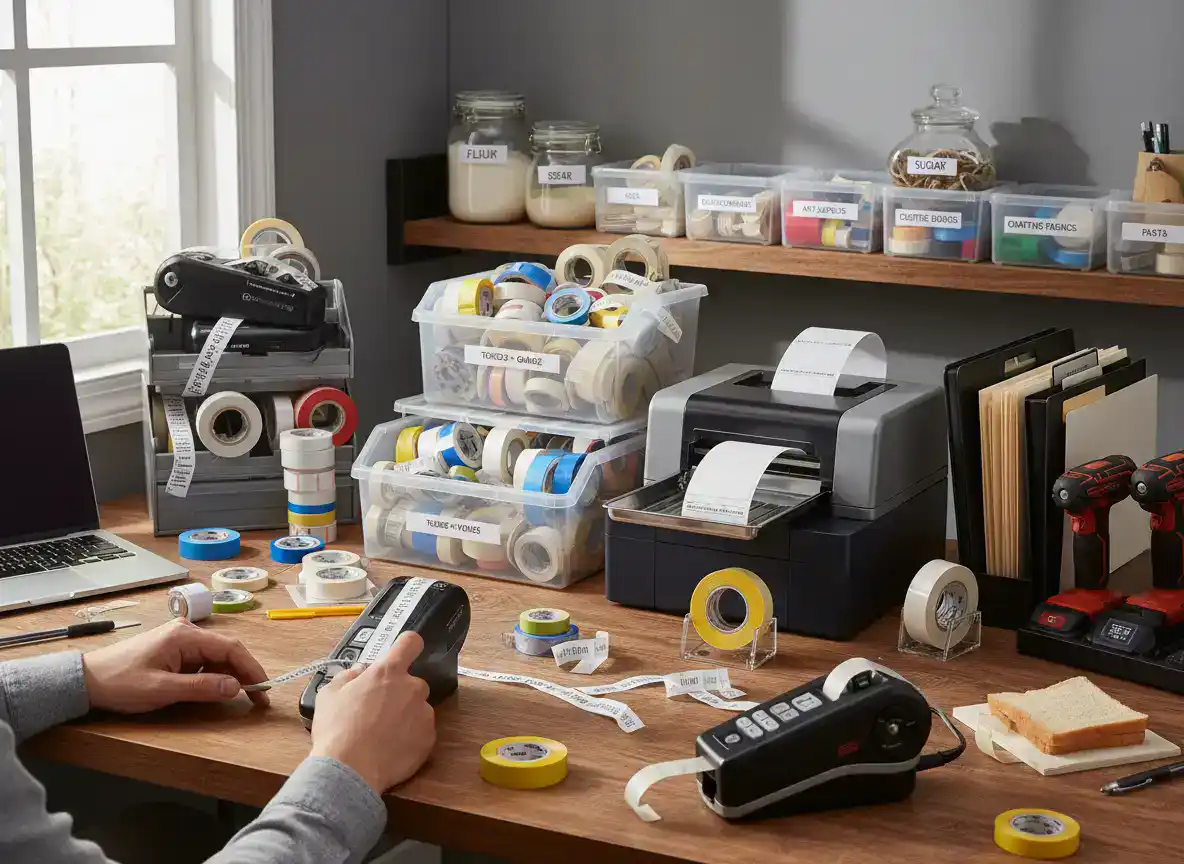
3) Label maker tapes & label rolls (the “boring, constant re-order” consumable)
Best products to sell online in 2026 often look boring — because boring is predictable. Label maker consumables are a perfect example: people buy the same tape again and again once they’ve got a labeler in the house, shed, office, or storeroom.
Who buys this (and why they buy it online)
- Small businesses (retail, warehouses, workshops): shelves, stock bins, cables, tools, storage tubs.
- Tradies: labelling tool cases, parts drawers, switchboards, gear, site boxes.
- Home organisers: pantry labels, kids’ school gear, storage tubs, craft drawers.
- Offices & clinics: files, folders, equipment, cables, “do not remove” labels.
Why online? Because label consumables are all about exact compatibility (tape series, width, colour, adhesive type), and local shops often have limited choices. Online buyers want the right tape now — and once they know what they use, they reorder without thinking.
Demand check (quick, common-sense proof)
- Amazon AU has an ongoing best-sellers category specifically for Label Tapes: Amazon AU: Label Tapes best sellers
- People don’t “browse” for this. They search for exact terms like Brother TZe / DYMO / LetraTag / 12mm black-on-white: Brother TZe tape (Amazon AU) | DYMO label tape (Amazon AU)
What you actually sell (so you don’t become a commodity)
- Compatibility-first listings: “Fits X models” beats “cheap tape”.
- Multi-packs: 3-pack / 5-pack / mixed colour packs (higher basket, same shipping).
- Use-case packs: “Workshop labels pack”, “Home organisation pack”, “Office filing pack”.
- Premium variants: laminated, extra-strong adhesive, removable, heat/water resistant (higher willingness to pay).
Returns reality check (what can go wrong)
| Return driver | How you prevent it |
|---|---|
| Wrong tape series / wrong cartridge | Put a compatibility list near the top + “NOT for…” exclusions. Use a simple “Choose your model” chart image. |
| Wrong width/colour/finish | Show width in mm, label colour sample, and a photo next to a ruler/coin. Call out matte vs gloss. |
| “Compatible” vs “genuine” expectations | Be explicit: Genuine or Compatible replacement. Don’t let customers guess. |
Margin reality check (gross vs net, including postage)
This is a classic consumable play: margins can look great on paper, but shipping and small order size decide whether it’s actually worth your time. The cure is simple: multi-packs and bundle packs.
- Gross margin = product profit before shipping and fees.
- Net contribution = what’s left after shipping label + payment fees (still before overheads like ads/time).
Formulas (ex GST):
Gross margin % = (SellPrice_exGST − COGS) / SellPrice_exGST
Net contribution = Revenue − COGS − ShippingLabel − PaymentFees − ReturnsAllowance
| Example (3-pack tape order) | Amount |
|---|---|
| Sell price (inc GST) | $29.95 |
| Sell price (ex GST) | $27.23 |
| COGS: 3 tapes + inbound freight allowance (ex GST) | $10.20 |
| Shipping label you pay (letter/satchel/parcel, ex GST) | $7.00 (varies by weight, zone, carrier rates) |
| Payment fee (example) | $0.75 |
| Returns allowance (low-return category, example) | $0.14 |
| Gross margin (product-only, ex GST) | $17.03 (~63%) |
| Net contribution (after label + fees, ex GST) | $9.14 (~34%) |
Plain English: sell singles and postage will bully you. Sell multi-packs and “use-case bundles” and you’ve got a stable, repeatable category.
How to sell it (so returns stay low)
- Compatibility chart: one simple table/image: tape series → compatible models.
- Lead with width + type: “12mm laminated” / “extra-strong adhesive” / “removable”.
- Bundle logic: black-on-white + clear + cable-wrap label pack, etc.
- Make it unmissable: “If your label maker uses X cassette, buy X.” Don’t be subtle.
How to source this product in Australia
Start with Australian office/stationery wholesalers and labelling supply distributors so you can test demand without overbuying. The risk isn’t breakage — it’s stocking the wrong compatibility lines. Keep the range tight at first (your top tape series + widths), then expand based on what actually sells.
If it’s compatible, consumable, and people reorder it without “shopping around”, you’ve found the kind of boring product that quietly prints money.
Amazon AU add-on: fees & platform risks (before you commit)
Selling on your own site gives you control. Selling on Amazon gives you traffic — but it also adds a real cost stack and a few platform-specific risks. Model it first.
1) The basic fee stack (Amazon AU)
- Selling plan: Amazon typically offers an item-per-sale plan (per-item fee) and a monthly plan. Check the current AU pricing here: Amazon AU seller pricing
- Referral fee: varies by category and can change — confirm before committing.
- Fulfilment cost: either you ship (FBM) or Amazon ships (FBA). Both have real costs; include them in the maths.
- Ads can become “non-optional”: treat advertising as a line item, not a surprise.
Quick formulas (ex GST):
TotalSalesPrice = ItemPrice + DeliveryCharged
ReferralFee = TotalSalesPrice × ReferralFeeRate
Net contribution (Amazon) = TotalSalesPrice − COGS − FulfilmentCost − ReferralFee − AdsAllowance − ReturnsAllowance
2) “Marketplace competition” reality (the part people forget)
- Popular products attract clones: if something sells well, other sellers (and sometimes the platform itself via private-label / house brands) may introduce similar alternatives. Treat that as a normal competitive risk on large marketplaces.
- Price pressure is real: identical or near-identical listings tend to race to the bottom unless you differentiate.
3) How you reduce that risk (without needing a law degree)
- Bundle & multipack: harder to compare, better margin protection.
- Differentiate with compatibility clarity: “fits these models” charts, exclusions (“NOT for…”), widths, adhesive type, durability.
- Brand the unboxing: packaging, inserts, consistent naming — make it “your kit”, not “a tape”.
- Own a niche: “workshop labelling pack” beats “label tape”.
- Spread channel risk: don’t rely on one platform for 100% of sales if the product becomes hot.
On Amazon, “small and cheap” can be a trap. Bundles + clear differentiation are how boring consumables stay boringly profitable.

4) Art & craft consumables (the “I’m making stuff” category that keeps reordering)
Art supplies aren’t just for “artists”. They’re for schools, parents, hobbyists, craft markets, and a growing crowd of adults who’ve decided they want a creative outlet that isn’t doomscrolling. The winners here are the consumables: paper, sketchbooks, pads, inks, paint refills, marker refills, blades, glue sticks, tape, cutting mats, basic brushes.
The trick is not trying to stock “everything”. You pick a tight, sensible range, label it clearly, bundle it intelligently, and you let reorder behaviour do the heavy lifting.
Who buys this (and why they buy it online)
- Parents: school projects, rainy-day crafts, “keep the kids busy” kits.
- Teachers & schools: bulk classroom supplies, repeat ordering, predictable needs.
- Hobbyists: drawing, journaling, watercolour, calligraphy, model making, scrapbooking.
- Micro-businesses (Etsy/markets): packaging + crafting + labelling + product finishing.
Why online? Because people want specific specs: paper weight (gsm), size, texture, pigment type, refill compatibility, and “is this actually decent or a kids’ toy?” Local stores are fine for browsing — but online wins for range, bundles, and repeat reorder convenience.
Why this works (especially in Australia)
- Repeat buy: paper runs out, pens dry up, blades blunt, glue disappears into the ether.
- Bundling is natural: pads + pencils + erasers; paint + brushes + palette; “term starter packs”.
- Low breakage if you choose right: focus on non-fragile items; package flat items properly.
- Seasonal bumps without being seasonal-only: back-to-school and holidays help, but demand exists year-round.
Returns reality check (what can go wrong)
| Return driver | How you prevent it |
|---|---|
| Expectation mismatch (quality/finish) | Be blunt: “student grade” vs “artist grade”, show close-up photos, list gsm / pigment / tip type. |
| Wrong size (A4/A3, pad thickness) | State dimensions clearly + a simple “fits in a standard school bag” style note. |
| Transit damage (bent corners, creased pads) | Ship flat with rigid protection (cardboard sheets) + “Do Not Bend” where relevant. |
Margin reality check (gross vs net, including postage)
Art & craft can look juicy on paper, but shipping eats small orders. Like label rolls, this is often a bundle product. You want multi-item baskets: pads + tools + refills — not “one sketchbook shipped across the continent”.
Formulas (ex GST):
Gross margin % = (SellPrice_exGST − COGS) / SellPrice_exGST
Net contribution = Revenue − COGS − ShippingLabel − PaymentFees − ReturnsAllowance
| Example (single pad order) | Amount |
|---|---|
| Sell price (inc GST) | $34.95 |
| Sell price (ex GST) | $31.77 |
| COGS (ex GST) | $12.50 |
| Shipping label you pay (ex GST) | $8.50 |
| Payment fee (example) | $0.90 |
| Returns allowance (example) | $0.50 |
| Gross margin (product-only, ex GST) | $19.27 (~61%) |
| Net contribution (after label + fees, ex GST) | $9.37 (~30%) |
Plain English: you win by nudging baskets upward: “add a refill”, “add a 3-pack”, “add a tool kit”, “free shipping over $X”.
How to sell it (without creating returns you could see from space)
- Lead with specs: gsm, size, sheets, finish, compatibility (refills), pigment type (if relevant).
- Bundle like a grown-up: “Back-to-school art pack”, “Watercolour starter pack”, “Journaling basics kit”.
- Stop stocking heartbreak: avoid fragile glass/solvent stuff until you’re ready (hazmat/shipping drama).
- Use simple guidance: “Good for pencil/ink/watercolour” saves a mountain of support tickets.
- Make repurchase easy: “Buy again” links + clear product naming that people can remember.
How to source this product in Australia
Start with reputable Australian distributors/wholesalers so quality is consistent and returns don’t eat you alive. Keep the range tight: 2–3 paper types, 2–3 pen/marker lines, basic tool kits, then expand based on actual repeat orders.
Don’t try to be an art superstore. Be the shop that sells the right basics, clearly described, bundled sensibly, and reordered without drama.

5) 3D printer filament & consumable accessories (the “it ran out / it clogged / I need it now” category)
3D printing looks like a hobby until you realise how many people use it for work: prototypes, jigs, brackets, replacement parts, school projects, Etsy products, cosplay, and “fix it now” jobs. The repeat-buy engine is simple: filament runs out, and printers constantly consume/kill small parts (nozzles, build surfaces, PTFE, belts, desiccant).
This is one of those categories where buyers become loyal once you prove you sell the right spec, pack it properly, and ship fast.
Who buys this (and why they buy it online)
- Makers & hobbyists: steady filament burn + “I need a nozzle kit” purchases.
- Schools / STEM programs: repeat ordering of PLA/PETG, classroom-friendly materials.
- Small businesses: printing parts, prototypes, jigs, product components.
- Etsy/market sellers: consistent consumption + reliability matters more than bargain hunting.
Why online? Because specs matter and locals often stock a tiny, random selection. Online buyers want 1.75mm vs 2.85mm, specific materials (PLA/PETG/TPU/ASA), colour consistency, spool size, and known brands. They’ll happily buy online if you make compatibility idiot-proof.
Why this works (especially in Australia)
- Repeat buy baked in: filament is literally a consumable.
- Accessories create basket size: nozzles, PEI sheets, glue, scraper tools, PTFE tube, hotend socks, desiccant.
- High intent searches: “PLA 1.75mm 1kg”, “PETG black”, “0.4mm nozzle brass”, “PEI sheet 235x235”.
- Returns can be low if you label specs clearly (most returns are preventable).
Returns reality check (what can go wrong)
| Return driver | How you prevent it |
|---|---|
| Wrong filament diameter (1.75 vs 2.85) | Put diameter in the title, first bullet, and a big spec badge image. |
| Material mismatch (PLA vs PETG vs TPU etc.) | Plain-language “best for” guide + print temp range + “not recommended for” notes. |
| Moisture problems (brittle, stringy prints) | Ship sealed + desiccant, state storage tips, sell a cheap “dry-box kit” add-on. |
| Build plate / sheet doesn’t fit | List exact dimensions and compatible printer models; include a simple diagram image. |
Margin reality check (gross vs net, including postage)
Filament margins can look fine until you post a 1kg spool across the country. This becomes a basket-building category: two spools, or one spool + accessories, is where the economics start behaving.
Formulas (ex GST):
Gross margin % = (SellPrice_exGST − COGS) / SellPrice_exGST
Net contribution = Revenue − COGS − ShippingLabel − PaymentFees − ReturnsAllowance
| Example (single 1kg spool order) | Amount |
|---|---|
| Sell price (inc GST) | $39.95 |
| Sell price (ex GST) | $36.32 |
| COGS (ex GST) | $18.00 |
| Shipping label you pay (ex GST) | $9.50 |
| Payment fee (example) | $1.10 |
| Returns allowance (low, example) | $0.50 |
| Gross margin (product-only, ex GST) | $18.32 (~50%) |
| Net contribution (after label + fees, ex GST) | $7.22 (~20%) |
Plain English: one-spool orders are OK, but two spools or spool + accessories is where profit stops being fragile.
How to sell it (without creating returns you could see from space)
- Make the spec unmissable: diameter, weight, material, colour, tolerance, recommended temps.
- Bundle smartly: “2-spool saver packs”, “PLA starter + nozzle kit”, “PETG + PEI sheet bundle”.
- Sell the boring fixes: nozzle multipacks, hotend socks, PTFE tube, desiccant, scraper + glue stick.
- Add a simple chooser guide: PLA (easy), PETG (tougher), TPU (flex), ASA (outdoor) — one sentence each.
- Protect in transit: keep filament sealed; don’t ship “loose spools in a floppy satchel”.
How to source this product in Australia
Start with reliable Australian distributors (consistent quality beats bargain filament that triggers support tickets). Keep the range tight at first: a couple of PLA lines, one PETG line, standard diameters, and the top accessory sellers (nozzles/PEI/desiccant). Expand only after you see repeat purchase behaviour.
Filament is the “razor blade” of 3D printing: it runs out, it reorders, and the accessories quietly keep the profit healthy.

6) DIY consumables (drill bits, sanding discs & fixings kits — the “I used it up” repeat-buy category)
DIY consumables are the opposite of sexy — and that’s why they sell. Bits dull, discs wear out, blades get blunt, and people constantly need “a bunch of assorted fixings” for the next job. This category works because the customer intent is practical and urgent: something ran out or something failed.
Who buys this (and why they buy it online)
- Home DIYers: weekend projects, repairs, furniture builds, “I need it for tomorrow”.
- Trades (small operators): bulk repeat orders, job-specific consumables, standardised kits.
- Workshops & maintenance teams: always topping up sanding, cutting, drilling and fixings.
- Makers: repeat ordering of drill bits, Dremel-type consumables, fasteners, consumable hardware.
Why online? Because offline stores often win on “right now”, but online wins on range, spec clarity, and bundle value. If you make it easy to choose the correct size/material/grit, people will happily reorder the same packs again and again.
Why this works (especially in Australia)
- Repeat buy: consumables wear out by definition.
- High basket potential: it’s natural to buy 3–6 items in one go (bits + discs + fixings + blades).
- Low “fashion risk”: a 10mm masonry bit doesn’t go out of style.
- Good SEO intent: searches are specific (grit, diameter, material, pack size).
Returns reality check (what can go wrong)
| Return driver | How you prevent it |
|---|---|
| Wrong size/spec (diameter, shank type, grit) | Put key specs in the title + a “spec badge” image. Add a 1-line chooser guide. |
| Wrong material use (wood vs metal vs masonry) | Label clearly: wood / metal / masonry and what it’s NOT for. |
| Expectation mismatch (cheap vs pro-grade) | Be blunt: “DIY grade” vs “trade grade”. Explain lifespan factors (material hardness, speed, technique). |
Margin reality check (gross vs net, including postage)
Most items here are small and cheap — so postage can wreck one-item orders. This is a basket-builder category: customers should buy packs, multi-packs, and job kits.
Formulas (ex GST):
Gross margin % = (SellPrice_exGST − COGS) / SellPrice_exGST
Net contribution = Revenue − COGS − ShippingLabel − PaymentFees − ReturnsAllowance
| Example (job kit order: bits + sanding discs + fixings) | Amount |
|---|---|
| Sell price (inc GST) | $49.95 |
| Sell price (ex GST) | $45.41 |
| COGS (ex GST) | $18.50 |
| Shipping label you pay (ex GST) | $8.50 |
| Payment fee (example) | $1.10 |
| Returns allowance (low, example) | $0.50 |
| Gross margin (product-only, ex GST) | $26.91 (~59%) |
| Net contribution (after label + fees, ex GST) | $16.81 (~37%) |
Plain English: don’t sell a single sanding disc. Sell the pack. Better: sell the job kit.
How to sell it (without creating returns you could see from space)
- Build “job kits”: “Deck sanding kit”, “Metal drilling starter kit”, “Hanging shelves kit”.
- Make specs unavoidable: diameter, shank type, grit, pack size, material use.
- Offer multi-packs: 3-pack / 5-pack / 10-pack beats one-offs.
- Add reorder hooks: “Buy again” prompts and “works with” upsells (bits → cutting discs → fixings).
- Don’t race to the bottom: sell value (pack size, consistency, clear specs) not the lowest price.
How to source this product in Australia
Start with Australian distributors/wholesalers and keep SKUs tight: popular grit ranges, common drill sizes, and a few high-velocity fixings kits. Expand only when you see repeat purchase behaviour and low return rates.
Consumables win because they wear out. Your job is to make the right spec obvious, then bundle it so postage doesn’t eat the profit.
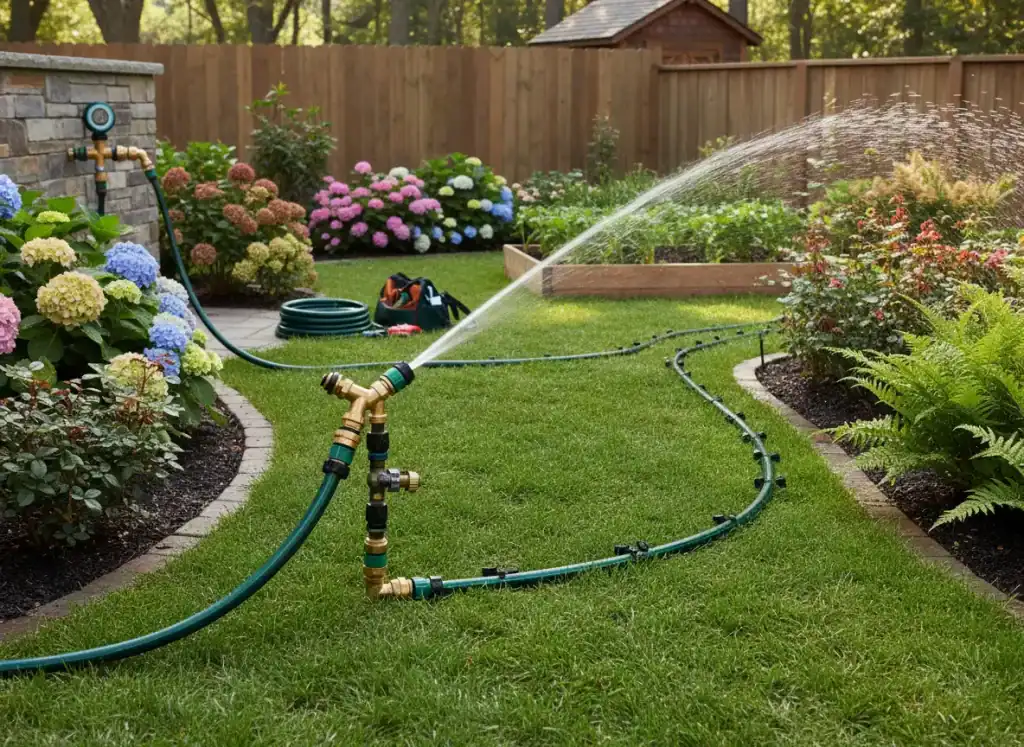
7) Garden irrigation fittings & hose connectors (one of the best products to sell online because people buy “the exact part”)
Irrigation fittings are a sneaky winner: connectors, joiners, elbows, tees, clamps, timers, micro-drip parts, tap adaptors, hose repair kits. They’re small, light, and bought under mild panic: “my hose leaks” or “this sprinkler line doesn’t reach”. That makes them one of the best products to sell online — because the buyer isn’t browsing for fun, they’re searching for a fix.
Who buys this (and why they buy it online)
- Home gardeners: repairs, extensions, seasonal upgrades, drip conversions.
- Property owners: rental maintenance, quick fixes, “keep it alive while I’m away”.
- Landscapers (small operators): repeat top-ups of common fittings and timers.
- Hobby growers: veggie patches, greenhouses, raised beds (micro-drip parts vanish constantly).
Why online? Compatibility and exact sizing. Local stores carry “some” fittings. Online shoppers want the exact diameter, the exact thread, and the exact brand/style — and once they find a store that labels it clearly, they come back. That repeat behaviour is exactly what you want when chasing the best products to sell online.
Demand check (quick, common-sense proof)
- People constantly search for specific parts: “hose connector 12mm”, “tap adaptor 3/4”, “drip irrigation joiner”.
- In Australia, heat + water restrictions + “keep the garden alive” seasons create reliable year-round demand, with spikes in spring/summer.
Why this works (especially in Australia)
- Repeat buys: parts crack, leak, get lost, get upgraded, or get expanded.
- Low shipping drama: small, durable, not fragile (choose non-glass, non-liquids).
- Natural bundles: “hose repair kit”, “drip starter pack”, “sprinkler tune-up pack”.
- Clear intent keywords: size + brand + problem (“leaking”, “repair”, “joiner”).
Returns reality check (what can go wrong)
| Return driver | How you prevent it |
|---|---|
| Wrong size (diameter / thread) | Put sizes in the title + a simple “fits X mm hose / 3/4" tap” line above the fold. |
| Compatibility mismatch (brand/style) | List compatible brands + “not compatible with” notes where relevant. |
| Quality expectation (cheap vs heavy-duty) | Offer two tiers: “standard” vs “heavy-duty” and explain the use case in one sentence. |
Margin reality check (gross vs net, including postage)
This category can be great, but single tiny items can get postage-smashed. So treat it like the other best products to sell online in the consumables world: increase basket size with packs and kits.
Formulas (ex GST):
Gross margin % = (SellPrice_exGST − COGS) / SellPrice_exGST
Net contribution = Revenue − COGS − ShippingLabel − PaymentFees − ReturnsAllowance
| Example (repair kit + extra fittings order) | Amount |
|---|---|
| Sell price (inc GST) | $39.95 |
| Sell price (ex GST) | $36.32 |
| COGS (ex GST) | $13.20 |
| Shipping label you pay (ex GST) | $8.50 |
| Payment fee (example) | $0.90 |
| Returns allowance (low, example) | $0.30 |
| Gross margin (product-only, ex GST) | $23.12 (~64%) |
| Net contribution (after label + fees, ex GST) | $13.72 (~38%) |
Plain English: the profit is in kits + top-up orders. Make “add 2 more joiners” the default behaviour.
How to sell it (without creating returns you could see from space)
- Make choosing idiot-proof: size, thread, and “what it connects to” must be obvious.
- Sell kits: hose repair kit, drip starter pack, “leak fix pack”, “summer watering pack”.
- Offer two quality tiers: standard vs heavy-duty (reduce “cheap junk” complaints).
- Use compatibility tables: one simple table beats 20 support emails.
- Upsell naturally: clamps, extra joiners, timers, washers, thread tape.
How to source this product in Australia
Use reputable Australian distributors and start with the high-frequency sizes and fittings. Keep SKUs tight: the top diameters, common tap adaptors, and a few repair kits. Then expand based on actual sales data — that’s how you build a list of best products to sell online that’s based on reality, not vibes.
Irrigation parts are one of the best products to sell online because buyers want an exact match — and they reorder from whoever makes that choice easiest.
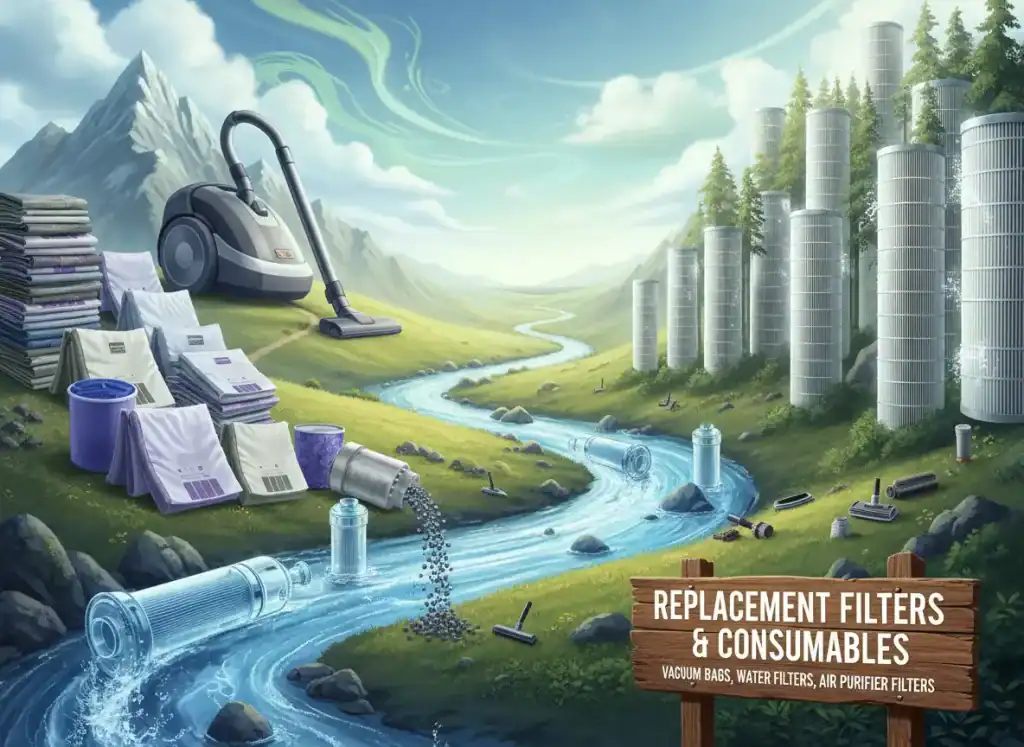
8) Replacement filters & consumables (one of the best products to sell online because people reorder the exact same model)
Replacement consumables are brutally practical: vacuum bags, water filters, and air purifier filters. Customers don’t “shop around” emotionally — they search their model number, buy the right one, and repeat. That reorder loop is why this is consistently one of the best products to sell online if you label compatibility properly.
Who buys this (and why they buy it online)
- Busy households: vacuum bags/filters, fridge filters, purifiers (set-and-forget replacements).
- Pet owners: higher replacement frequency (hair + dander = faster clogging).
- Small offices: “keep the place breathable” purchases, ordered repeatedly.
- Health-conscious buyers: purifiers and filters treated like essential consumables.
Why online? Compatibility beats convenience. Local stores carry a narrow range. Online buyers want the exact model fit and they’ll reorder from whoever made the first purchase painless. That’s exactly the behaviour you want when building a list of best products to sell online.
Why this works (especially in Australia)
- Recurring replacement: filters and bags wear out on a schedule.
- Small + shippable: light, not fragile, easy pick/pack.
- Strong search intent: “model + filter” queries are high-intent and low-browse.
- Low seasonality: steady all year (with air purifier spikes during smoke/pollen periods).
Returns reality check (what can go wrong)
| Return driver | How you prevent it |
|---|---|
| Wrong compatibility (model mismatch) | Put a compatibility list above the fold + “fits models” in the title. |
| Wrong size/shape (filter variant confusion) | Show dimensions + a clear product photo + “this replaces part # ____”. |
| Performance expectations (generic vs OEM) | Be blunt: OEM vs compatible. Explain lifespan and “best for” use cases. |
Margin reality check (gross vs net, including postage)
Most replacement filters look healthy on margin, but the profit is maximised when you avoid one-item postage pain. Treat this like the other best products to sell online: bundles, multi-packs, and subscribe-and-save (if available).
Formulas (ex GST):
Gross margin % = (SellPrice_exGST − COGS) / SellPrice_exGST
Net contribution = Revenue − COGS − ShippingLabel − PaymentFees − ReturnsAllowance
| Example (2-pack filter order) | Amount |
|---|---|
| Sell price (inc GST) | $59.95 |
| Sell price (ex GST) | $54.50 |
| COGS (ex GST) | $22.00 |
| Shipping label you pay (ex GST) | $9.50 |
| Payment fee (example) | $1.30 |
| Returns allowance (low, example) | $0.40 |
| Gross margin (product-only, ex GST) | $32.50 (~60%) |
| Net contribution (after label + fees, ex GST) | $21.30 (~39%) |
Plain English: the win is “same customer, same filter, every X months”. That’s why this is one of the best products to sell online for predictable revenue.
How to sell it (without creating returns you could see from space)
- Compatibility first: model list + part number + “replaces ____” line.
- Sell multi-packs: 2-pack / 3-pack / 6-pack beats single-unit economics.
- Add a simple replacement guide: “Replace every 3–6 months” (and what changes that).
- Offer OEM and compatible options: let the customer choose based on budget and preference.
- Make reordering easy: “buy again” links, subscriptions, and reminder emails.
How to source this product in Australia
Start with reputable Australian distributors and pick a tight range of the highest-volume models. Don’t try to cover everything on day one — build the range from what customers actually search for and reorder. That’s how you build a real-world list of best products to sell online, not a theoretical one.
Replacement consumables are the best products to sell online when you make compatibility idiot-proof — because the customer comes back and buys the same thing on repeat.

9) Board games & puzzles (experience products that still rank among the best products to sell online)
Board games and puzzles work for a different reason than consumables — they sell experiences. Family nights, gifts, rainy weekends, screen-free time, and social connection all drive purchases. Done carefully, they remain some of the best products to sell online, even in a crowded market.
The mistake most sellers make is going too broad. The opportunity is in curated niches, clear age guidance, and gift-ready positioning.
Who buys this (and why they buy it online)
- Parents & families: screen-free entertainment, school holidays, birthday gifts.
- Adults: strategy games, party games, puzzle downtime.
- Gift buyers: last-minute but thoughtful purchases (age + interest driven).
- Educators: logic games, cooperative play, classroom-friendly puzzles.
Why online? Discovery and comparison. Buyers want to read rules summaries, see age ranges, check difficulty, and understand who this is actually for. That research behaviour is why these can be best products to sell online when listings do the explaining properly.
Why this works (especially in Australia)
- Evergreen demand: families don’t stop needing indoor entertainment.
- Strong gifting behaviour: birthdays, Christmas, “bring-a-gift” events.
- No sizing drama: unlike clothing or footwear.
- High perceived value: people happily pay for a good shared experience.
Returns reality check (what can go wrong)
| Return driver | How you prevent it |
|---|---|
| Wrong age/difficulty | State age range + skill level clearly (“7+”, “family”, “strategy-heavy”). |
| Expectation mismatch (fast vs long games) | List typical play time and player count prominently. |
| Damaged boxes | Over-box properly — presentation matters for gifts. |
Margin reality check (gross vs net, including postage)
Margins are usually solid, but postage can hurt single-item orders. Like many best products to sell online, this category benefits from basket building and free-shipping thresholds.
Formulas (ex GST):
Gross margin % = (SellPrice_exGST − COGS) / SellPrice_exGST
Net contribution = Revenue − COGS − ShippingLabel − PaymentFees − ReturnsAllowance
| Example (mid-size board game) | Amount |
|---|---|
| Sell price (inc GST) | $59.95 |
| Sell price (ex GST) | $54.50 |
| COGS (ex GST) | $28.00 |
| Shipping label (ex GST) | $9.50 |
| Net contribution | $17.00 (~31%) |
How to sell it (without racing Amazon to the bottom)
- Curate tightly: family games, strategy games, puzzles by age/difficulty.
- Write human descriptions: explain the fun, not just the rules.
- Use bundles: “family game night pack”, “puzzle + puzzle mat”.
- Lean into gifting: gift tags, age badges, “great for…” notes.
- Don’t chase everything: focus on titles people search for repeatedly.
How to source this product in Australia
Work with established Australian distributors and avoid novelty one-offs. Stick to proven titles, evergreen puzzles, and games with strong reviews. That’s how board games earn their place among the best products to sell online — consistently, not accidentally.
Board games remain some of the best products to sell online when you sell the experience clearly — and stop trying to be everything to everyone.

10) Educational non-electronic toys (wooden puzzles, building blocks & Montessori-style kits — quietly some of the best products to sell online)
Educational non-electronic toys sell because they solve a real parental problem: “I want something that actually helps my kid learn… without a screen.” That combination of purpose + guilt relief + giftability is why these remain some of the best products to sell online year after year.
The trick is to avoid “random toy shop chaos” and instead sell by age, skill, and outcome (fine motor, letters, numbers, problem solving). When you do that, you’re not just selling toys — you’re selling confidence, progress, and calmer households (which is why they can be best products to sell online even with competition).
Who buys this (and why they buy it online)
- Parents of toddlers & preschoolers: screen-free play, developmental milestones, quieter entertainment.
- Grandparents: meaningful gifts that feel “better than plastic noise”.
- Early educators: classroom-friendly items, durable sets, repeat purchases.
- Parents of neurodiverse kids: sensory-friendly, predictable, hands-on learning tools.
Why online? Parents don’t want to guess. They want to filter by age and learning goal, read real descriptions, and compare quickly. That research-heavy behaviour is perfect for best products to sell online when your listings make the decision easy.
Why this works (especially in Australia)
- Evergreen demand: new kids are born every day; learning never goes out of season.
- Gift-driven: birthdays and Christmas are strong, but “just because” purchases are common too.
- Durable + re-usable: parents will pay more for “won’t break in a week”.
- Strong intent searches: “Montessori toy 2 year old”, “wooden counting blocks”, “fine motor toy”.
Returns reality check (what can go wrong)
| Return driver | How you prevent it |
|---|---|
| Wrong age/skill fit (too easy or too hard) | Add a clear age range + “skills built” bullets + difficulty notes (“starter / intermediate”). |
| Size expectations (smaller than imagined) | Show dimensions + “in-hand” photo (or scale reference) so parents don’t guess. |
| Quality expectations (finish, durability, paint) | Be explicit: materials, finish type, safety notes, and what “premium” means in practice. |
Margin reality check (gross vs net, including postage)
These often look great on gross margin, but packaging and breakage protection matter (wooden items can dent, corners can chip). To keep them in the “best products to sell online” category, you want bundles, gift sets, and a free-shipping threshold that avoids single-item postage pain.
Formulas (ex GST):
Gross margin % = (SellPrice_exGST − COGS) / SellPrice_exGST
Net contribution = Revenue − COGS − ShippingLabel − PaymentFees − ReturnsAllowance
| Example (wooden learning set) | Amount |
|---|---|
| Sell price (inc GST) | $69.95 |
| Sell price (ex GST) | $63.59 |
| COGS (ex GST) | $28.50 |
| Shipping label (ex GST) | $10.50 |
| Payment fee (example) | $1.45 |
| Returns allowance (low, example) | $0.60 |
| Net contribution (ex GST) | $22.54 (~35%) |
Plain English: if you sell the right age-fit and bundle well, these stay among the best products to sell online because parents come back for the “next stage” as kids grow.
How to sell it (without creating returns you could see from space)
- Sell by outcome: “Fine motor”, “Early maths”, “Letters & sounds”, “Problem solving”.
- Make age guidance unavoidable: age badge in the title + the first bullet point.
- Create progression bundles: “Age 2 starter set”, “Age 3 skills set”, “Pre-K learning pack”.
- Gift-ready options: add gift wrap, gift messages, and “great for…” tags.
- Use better photos: show scale, parts count, and what the kid actually does with it.
How to source this product in Australia
Start with reputable Australian distributors that can supply consistent quality and safety standards. Keep the range tight: best-selling age brackets (1–2, 2–3, 3–5), proven formats (stacking, counting, shape sorters, simple puzzles). That’s how you build a defensible list of best products to sell online — not just a toy catalogue.
Educational non-electronic toys are best products to sell online when you sell by age and outcome — because parents buy the “next stage” again and again.
Before you commit to any product, it’s worth understanding what typically fails. Many businesses don’t struggle because they picked the wrong platform — they struggle because they picked the wrong product. Our guide to the worst products to sell online breaks this down in detail.
What products sell best online in Australia in 2026?
The best products to sell online in Australia in 2026 are those that combine consistent demand with practical logistics. In simple terms, they must be affordable to ship, reliable in quality, and easy to replace or reorder.
In our experience, the products that perform best tend to fall into a few key categories:
- Consumables or repeat-use items (customers come back without needing heavy marketing)
- Small, durable products that survive shipping without damage
- Niche products with clear use cases rather than broad, generic items
- Products with stable suppliers — avoiding stock issues and delays
While many “trending products” lists focus on what’s popular right now, the reality is that long-term profitability in Australia comes from reliability, not hype.
The best products aren’t the ones everyone is chasing — they’re the ones you can sell again tomorrow without problems.
FAQ: Choosing the best products to sell online (Australia)
These questions help you pick best products to sell online that stay profitable after shipping, returns, and reality.
What makes something one of the best products to sell online (not just “popular”)?
The best products to sell online have predictable demand, low damage risk, low return risk, and either repeat purchase behaviour or strong bundling.
“Popular” products can still be awful if margins are thin and returns are high.
|
How do I check if a product is profitable once shipping is included?
Treat shipping like a cost of goods, not an afterthought. The best products to sell online are either small/light items that ship cheaply, or bundle-friendly categories where one label covers multiple items.
If single-item orders lose money, you must sell multi-packs, kits, or bundles.
|
What causes the most returns — and how do the best products to sell online avoid them?
Returns usually come from wrong fit/spec, expectation mismatch, or transit damage. The best products to sell online reduce this by making selection idiot-proof:
model compatibility lists, dimensions, real photos, and blunt “what it’s NOT for” notes.
|
Why do “boring consumables” keep showing up as best products to sell online?
Because they wear out. Filters, refills, tapes, connectors, bits, and replacement parts drive repeat orders.
That repeat loop is the quiet engine behind many best products to sell online stores.
|
What’s the fastest way to test demand before buying heaps of stock?
Start with a tight range of high-intent SKUs and watch what people search for and reorder.
The best products to sell online show up as low-support, repeat-buy items — not as “cool ideas”.
|
Which products look like best products to sell online, but are actually traps?
Traps include fragile goods, fashion/size-sensitive products, “looks different in real life” items, and anything with frequent defect claims.
If it creates tickets and returns, it’s not one of the best products to sell online for a small operator.
|
How do I write product pages that reduce returns and improve conversions?
Put the deciding specs in the title and above the fold, then add a short chooser guide.
Many best products to sell online are “spec purchases” — clarity beats cleverness every time.
|
How do I increase average order value with best products to sell online?
Bundle around a job or outcome: starter kits, repair packs, multi-packs, and “works with” add-ons.
Many best products to sell online only become properly profitable when the cart has 2–6 items, not one.
|
What Australian shipping realities should influence best products to sell online choices?
Australia punishes bulky/awkward freight and rewards small, light, non-fragile items.
If you want best products to sell online, prioritise categories that ship predictably and don’t explode your support inbox.
|
What’s a quick checklist to sanity-check “best products to sell online” candidates?
Ask: Is demand steady? Is it shippable? Are returns avoidable with clear specs? Can it be bundled or reordered?
If yes to all four, you’re looking at genuine best products to sell online contenders.
|
Internal links (relevant SBW guides)
These are the supporting guides that help readers actually succeed with best products to sell online — by reducing returns, improving platform decisions, and keeping the site stable under real traffic.
CONTACT SYDNEY BUSINESS WEB NOW!
get started online NOW with your ONLINE BUSINESS ENGINEERING